

Molti pensano che il pane si ammuffisca perché viene a contatto con l'aria.
Ecco perché molte persone mettono il pane in sacchetti di plastica e li chiudono bene, sperando di mantenerlo fresco più a lungo tenendo fuori l'aria.
Ma nella vita reale, queste cose capitano spesso:
- Il pane acquistato al supermercato, dopo pochi giorni in un sacchetto di plastica, presenta macchie di muffa.
- Il pane fatto in casa presenta delle goccioline d'acqua all'interno del sacchetto già il giorno dopo.
- Il lievito madre conservato in un sacchetto di plastica assume una crosta morbida e si deteriora più rapidamente.
- Quando fa caldo d'estate, il pane conservato nei sacchetti di plastica inizia a ammuffire nel giro di pochi giorni.
Quindi la vera domanda è:
Ma i sacchetti di plastica non dovrebbero proteggere proprio grazie alla loro chiusura ermetica? Perché a volte favoriscono invece la formazione di muffa?
La risposta dipende dall'umidità contenuta nel pane, dall'umidità presente nell'aria e dalle condizioni necessarie alla proliferazione della muffa.
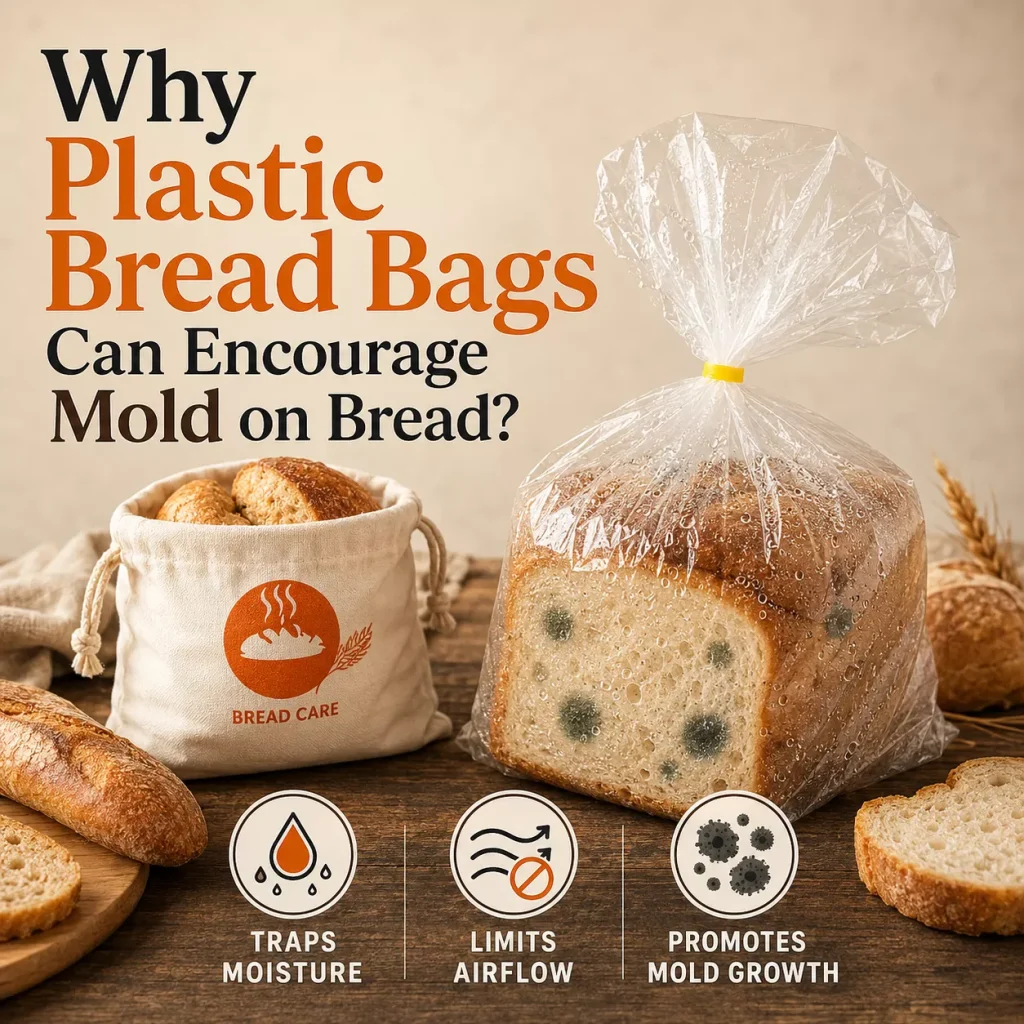
Perché il pane va a muffa?
Per prima cosa, sfatiamo un mito diffuso: Il pane non ammuffisce semplicemente perché entra in contatto con l'aria. Ammuffisce quando sono presenti le condizioni favorevoli alla formazione della muffa..
La muffa è un fungo. Le spore sono ovunque: nell’aria, sui piani di lavoro, sui coltelli, sulle mani, sulle confezioni e nei locali di stoccaggio.
La cottura uccide la maggior parte delle cellule viventi di muffa, ma durante il raffreddamento, il taglio, il confezionamento e la manipolazione, il pane può acquisire nuove spore dall’ambiente. Il confezionamento non è in grado di rimuovere le spore già presenti e non rende il pane sterile.
La formazione della muffa dipende principalmente dai seguenti fattori:
| Fattore | Effetti sulla proliferazione dei funghi |
|---|---|
| Umidità disponibile | Necessario per la crescita e il metabolismo dei funghi |
| Temperatura | La maggior parte dei funghi del pane cresce più rapidamente in condizioni di calore |
| Ossigeno | I normali sacchetti sigillati contengono ancora ossigeno |
| Livello di contaminazione | Un numero maggiore di spore iniziali può far comparire la muffa prima |
| Acidità e composizione | Il sale, lo zucchero, gli acidi organici e gli ingredienti antimuffa possono rallentare la crescita |
| Tempo di conservazione | Un periodo di tempo più lungo aumenta il rischio di formazione di muffa anche in condizioni non proprio ideali |
Perché all’interno dei sacchetti di plastica compaiono delle goccioline d’acqua?
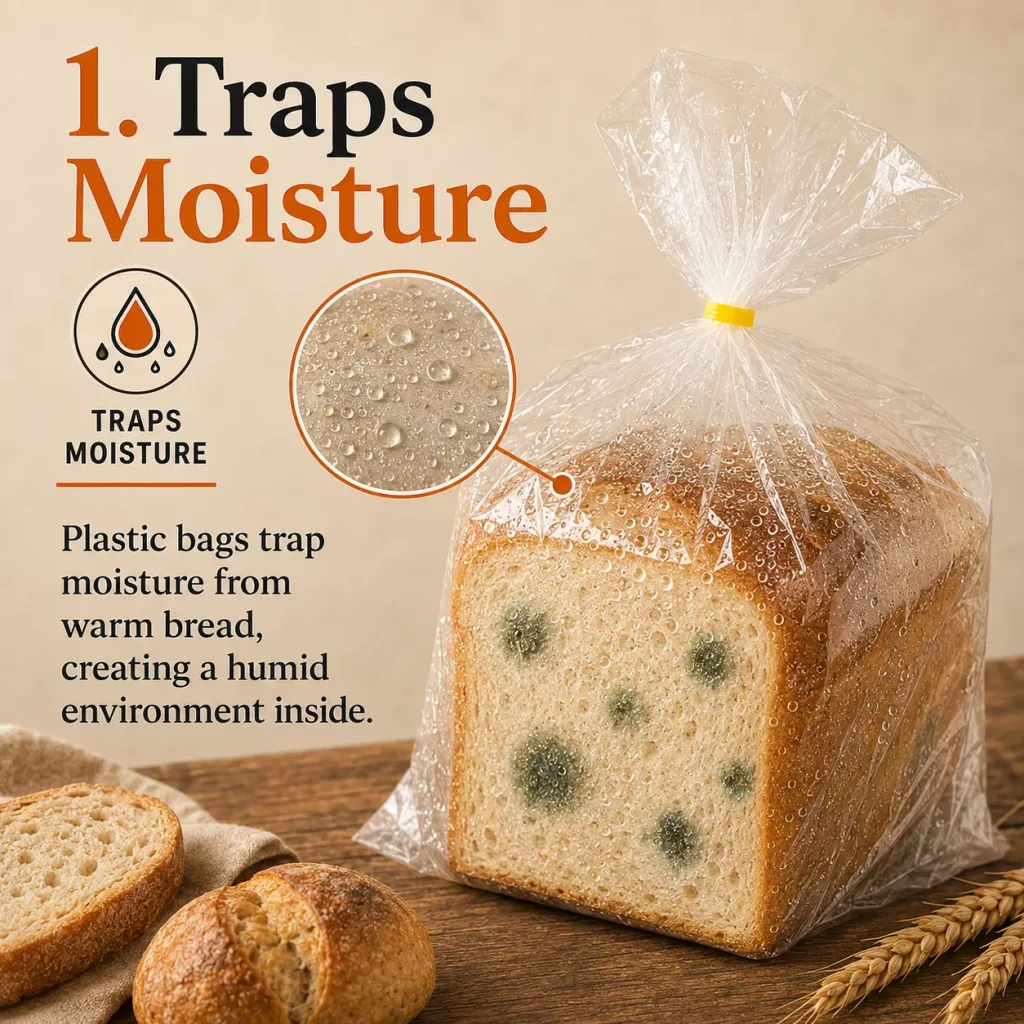
Quelle goccioline provengono solitamente dal vapore acqueo che il pane stesso rilascia.
Dopo la cottura, il pane trattiene ancora molto calore e umidità. Man mano che si raffredda, l’umidità si sposta dall’interno, più caldo e umido, verso la superficie e si trasforma in vapore nell’aria circostante.
Quando si mette il pane caldo in un sacchetto di plastica, di solito succede questo:
- Il pane continua a rilasciare calore e vapore all’interno del sacchetto.
- La plastica limita la quantità di vapore che può fuoriuscire.
- L'umidità all'interno del sacchetto aumenta.
- Il vapore colpisce la parete della borsa termica.
- Quando la temperatura locale scende al di sotto del punto di rugiada, il vapore si trasforma in acqua liquida.
Questo fenomeno si chiama condensazione.
Il confezionamento del pane ancora caldo, gli sbalzi di temperatura tra il giorno e la notte o il passaggio da ambienti climatizzati all’aria calda esterna possono tutti favorire questo fenomeno. La presenza di goccioline visibili non significa automaticamente che il pane non sia sicuro, ma indica che l’umidità non viene gestita correttamente e che la superficie potrebbe rimanere umida per molto tempo.
Se ciò dovesse accadere, estrai subito il pane in modo che sia la pagnotta che il sacchetto possano raffreddarsi e asciugarsi completamente. Non limitarti a rimuovere le goccioline e a richiudere il sacchetto: il pane potrebbe ancora rilasciare vapore.
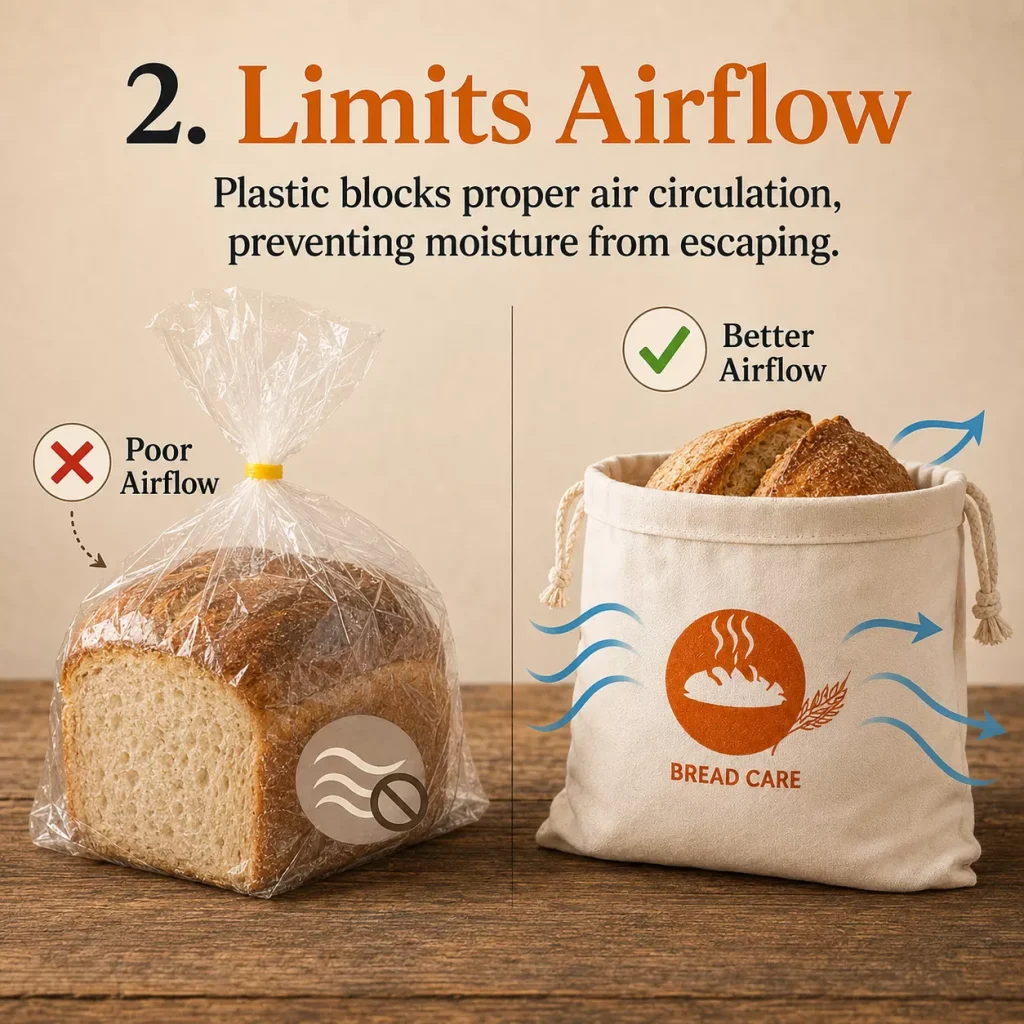
Ma i sacchetti di plastica sigillati non isolano l'aria?
“Nel caso dei normali sacchetti di plastica, il termine ”sigillato” indica principalmente un minore ricambio d’aria. Non significa che l’aria all’interno sia stata rimossa.
Quando si ripone il pane in un sacchetto, all’interno sono già presenti aria e ossigeno. Ogni volta che si apre il sacchetto, possono entrare nuova aria e spore. I normali sacchetti di plastica per uso domestico non creano un vero ambiente privo di ossigeno, a meno che non si utilizzino imballaggi verificati a vuoto, con iniezione di azoto o con atmosfera modificata a base di anidride carbonica.
In che modo i sacchetti di plastica influiscono sul rischio di formazione di muffa
I sacchetti di plastica hanno due effetti opposti sul pane.
Il lato positivo: minore perdita di umidità e indurimento più lento
La plastica sigillata limita la fuoriuscita di umidità, quindi la mollica rimane morbida più a lungo. Studi sulla conservazione domestica dimostrano che la plastica sigillata riduce la perdita di umidità e rallenta l’indurimento della mollica rispetto alle confezioni più permeabili. Questo è uno dei motivi principali per cui il pane tostato affettato in commercio viene solitamente confezionato in plastica.
Il lato negativo: potrebbe trattenere troppa umidità
Se il pane è ancora caldo, la superficie è umida o le temperature continuano a variare, la plastica può trattenere il vapore all’interno per molto tempo. L’elevata umidità non provoca di per sé la formazione di muffa, ma offre alle spore già presenti condizioni più favorevoli per la crescita.
In uno studio sulla conservazione domestica, il pane di grano comune conservato in un sacchetto di plastica a temperatura ambiente ha mostrato i primi segni visibili di muffa intorno al quarto giorno, mentre un pane a lievitazione naturale mista ne ha mostrati intorno al decimo giorno. La confezione non è l’unico fattore: anche la ricetta, la fermentazione e il livello iniziale di contaminazione hanno un’importanza notevole.
Perché il pane fatto in casa spesso fa la muffa più in fretta di quello acquistato al supermercato
Il pane fatto in casa di solito va a muffa più in fretta non perché sia “meno naturale” o “più umido”, ma perché le condizioni di produzione e di confezionamento sono diverse.
Il pane fatto in casa contiene raramente ingredienti specifici contro la muffa
Alcuni tipi di pane in commercio utilizzano propionati, sorbati o altri agenti antimuffa approvati, a seconda delle normative locali e della ricetta. Il propionato di calcio può fungere da antimicrobico nei prodotti da forno, mentre l’acido sorbico e i suoi sali possono inibire molti lieviti e muffe. Non tutte le pagnotte in commercio li contengono: controllate l’elenco degli ingredienti.
La produzione commerciale controlla la contaminazione in modo più sistematico
Può comprendere fasi controllate di raffreddamento, pulizia e disinfezione, affettatura e confezionamento automatici, monitoraggio della carica microbica iniziale, nonché test convalidati sul confezionamento e sulla durata di conservazione.
A casa, coltelli, taglieri, griglie di raffreddamento, contenitori per il pane e vecchie borse che non vengono puliti a fondo possono aumentare la quantità di spore presenti sul pane.
A casa è più difficile gestire i tempi di confezionamento
Spesso si mette il pane fatto in casa nei sacchetti prima che si sia raffreddato completamente al centro. Anche se all’esterno sembra freddo, l’interno può ancora rilasciare calore e vapore.
Non basarti su un numero fisso di minuti. Assicurati che la camera sia completamente fredda e che, dopo il confezionamento, non si formino condensa o goccioline sulle pareti del sacchetto.
Il lievito madre tende sempre a ammuffire più facilmente?
Non necessariamente.
Gli ingredienti, il tenore di umidità finale, l’acidità, il livello di salinità, i microrganismi fermentanti e il grado di cottura della pagnotta influiscono tutti sulla durata di conservazione del lievito madre. Gli acidi prodotti durante la fermentazione, come l’acido lattico e l’acido acetico, possono avere un certo effetto inibitorio sulla formazione di muffe; pertanto, a parità di condizioni, alcuni lieviti madre durano più a lungo rispetto ai normali pani a base di lievito di birra.
Questo effetto non è garantito. Il lievito madre può comunque ammuffire prima se:
- L'acidità da fermentazione è bassa
- Il centro della pagnotta è ancora piuttosto umido
- Si contamina durante il taglio o la manipolazione
- All'interno della confezione si forma della condensa
- L'ambiente di stoccaggio è caldo e umido
- È conservato vicino al pane già ammuffito
Perché i sacchetti di plastica ammorbidiscono il pane dalla crosta croccante
Le baguette, la ciabatta e alcune pagnotte rustiche devono la loro crosta croccante a una struttura relativamente secca che si forma durante la cottura.
Una volta che il pane è stato avvolto nella pellicola, l’umidità della mollica si sposta lentamente verso la crosta, più secca. Poiché la pellicola impedisce all’umidità di fuoriuscire, questa si ridistribuisce nella crosta e può causare:
- Perdere croccantezza
- Diventa morbido o gommoso
- La superficie risulta appiccicosa
- Perdere un po’ del suo aroma di forno
Si tratta di un cambiamento qualitativo, diverso dal deterioramento causato da microrganismi.
Per i toast morbidi, mantenere l’umidità è solitamente un vantaggio. Per il pane croccante, lo stesso effetto può rovinare la consistenza desiderata. Scegliete la confezione in base al tipo di pane, invece di considerare un unico sacchetto adatto a tutto.
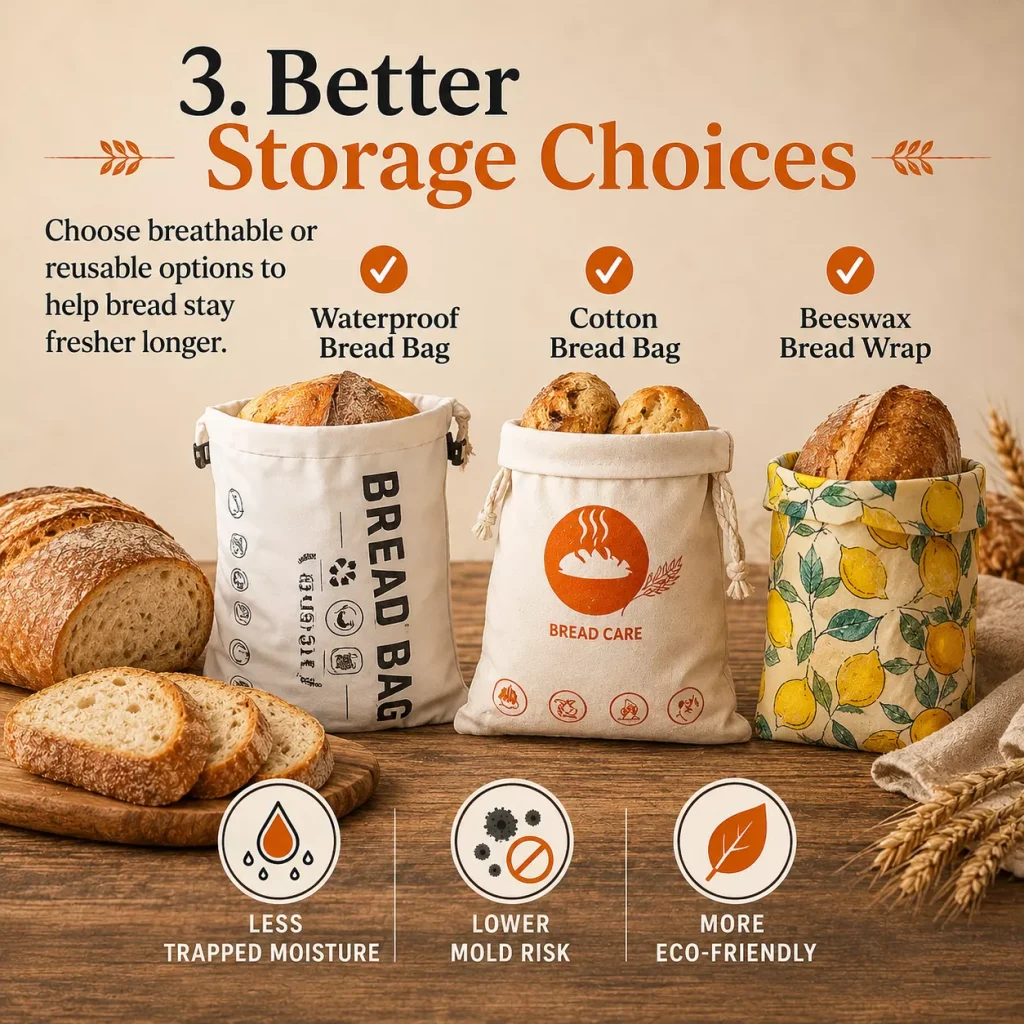
Perché i sacchetti per il pane in cera d’api possono funzionare meglio
Sempre più famiglie e panetterie stanno passando a sacchetti per il pane in cera d'api a causa della loro struttura.
Sono realizzati in cotone, cera d’api e, spesso, resina o olio vegetale. Non sono né completamente sigillati né completamente aperti: creano un microambiente semitraspirante che aiuta a regolare l’umidità.
Lo strato di cera d'api può ridurre la condensa, regolare delicatamente l'umidità, consentire un lento rilascio di vapore e limitare la formazione di zone umide che favoriscono la formazione di muffa.
Rispetto alla plastica comune, i sacchetti in cera d'api offrono spesso un equilibrio migliore tra ritenzione dell'umidità, circolazione dell'aria e freschezza complessiva. Sono particolarmente indicati per il pane a lievitazione naturale, quello integrale e altri tipi di pane artigianale fermentato.


In che modo i sacchetti di cotone per il pane contribuiscono a ridurre il rischio di muffa
Sacchetti di cotone per il pane rappresentano una scelta tradizionale.
Il loro punto di forza è l’ottima traspirabilità. Le fibre di cotone consentono all’aria di circolare, riducendo l’accumulo di vapore e la condensa e, di conseguenza, il rischio di formazione di muffa.
Sono particolarmente indicati per le baguette, le pagnotte in stile europeo, i pani rustici e qualsiasi tipo di pane in cui si desideri mantenere la crosta croccante.


Le borse di cotone, quelle di carta e i contenitori per il pane sono migliori?
Ogni opzione presenta i propri pro e contro.
| Metodo di conservazione | Vantaggi principali | Ideale per |
|---|---|---|
| Plastica sigillata per uso alimentare | Riduce la perdita di umidità e mantiene il pane morbido | Conservazione a breve termine di fette di pane tostato, panini e pane morbido |
| Sacchetti di carta | Permette al vapore di fuoriuscire, aiutando a mantenere asciutta la crosta | Baguette e pagnotte croccanti con consegna in giornata o il giorno successivo |
| Borse di cotone pulite | Riutilizzabile, di solito con un buon flusso d'aria | Conservazione a breve termine del pane croccante |
| Contenitori per il pane ventilati | Blocca la luce e le correnti d'aria intense | Conservazione a breve termine di pagnotte intere, non affettate |
| Sacchetti di cera d'api oppure involucri | Riutilizzabile, riduce gli imballaggi monouso | Conservazione a breve termine quando si preferiscono soluzioni ecologiche |
| Sacchetti sigillati per congelatore | Ideale per una conservazione più a lungo, riduce il rischio di bruciature da congelamento | Pane che non finirai presto |
Una maggiore traspirabilità non è automaticamente sinonimo di un risultato complessivamente migliore. Un flusso d’aria eccessivo riduce la condensa, ma accelera l’essiccazione e l’indurimento del pane. La scelta giusta dipende da cosa conta di più per te: una mollica morbida, una crosta croccante o una maggiore conservabilità.
Come conservare il pane in modo più razionale
Lasciare raffreddare completamente prima di confezionare
Appoggia il pane su una griglia pulita in modo che l'aria possa circolare sotto e ai lati. Prima di metterlo nel sacchetto, controlla che:
- Il centro non è più caldo
- La superficie non sembra calda al tatto
- Dopo il confezionamento non si forma rapidamente della nebbia
- Le superfici tagliate non risultano particolarmente umide o appiccicose
Non mettere mai il pane caldo appena sfornato in un contenitore ermetico.
Abbina la confezione al pane
Il pane tostato morbido e i panini richiedono una minore perdita di umidità, quindi per la conservazione a breve termine vanno bene sia la confezione originale che della plastica pulita per uso alimentare.
Baguette e altri tipi di pane croccante, consumati lo stesso giorno o il giorno dopo, si conservano meglio in sacchetti di carta, sacchetti di stoffa puliti o contenitori per il pane ventilati, se si desidera mantenere la crosta. Questi metodi, però, di solito fanno seccare più rapidamente la mollica.
Decidi in anticipo se congelare
Non aspettare che il pane sia quasi ammuffito.
Se sai che non lo finirai in fretta, taglialo a fette o in porzioni mentre è ancora fresco, riponilo in un contenitore per congelatore a tenuta stagna e congelalo. La conservazione a temperatura ambiente spesso dura solo circa 2–4 giorni, a seconda del tipo di pane, del clima e delle condizioni igieniche. Il congelamento è la soluzione migliore per una conservazione più a lungo.
In caso di congelamento:
- Assicurati che il pane sia completamente freddo.
- Tagliare a fette o suddividere in porzioni.
- Utilizzare confezioni sigillate adatte al congelatore.
- Eliminare l'aria in eccesso.
- Indica la data.
- Scongelate solo la quantità necessaria, in modo che il resto non sia sottoposto a ripetuti cicli di congelamento-scongelamento.
Fai attenzione al frigorifero
Il freddo rallenta la formazione di muffa, ma di solito accelera la retrogradazione dell’amido, per cui la mollica si indurisce e si asciuga più rapidamente.
Quando fa molto caldo e c'è molta umidità, e la temperatura ambiente favorisce la formazione rapida di muffa ma non è possibile congelare immediatamente il pane, il frigorifero può rappresentare una soluzione temporanea: basta conservare il pane ben sigillato per limitare la perdita di umidità e gli odori del frigorifero.
Qualsiasi prodotto da forno con ripieni deperibili (panna, crema pasticcera, carne, uova, formaggio, ecc.) deve rispettare le norme di sicurezza alimentare relative al ripieno e le indicazioni riportate sull'etichetta del prodotto.
Mantenere puliti gli attrezzi e gli spazi di stoccaggio
Le briciole presenti nelle scatole, sui coltelli, sui taglieri e sui sacchetti possono trasportare spore.
- Svuotare e pulire regolarmente i contenitori per il pane e asciugarli accuratamente.
- Non riutilizzare gli imballaggi che non possono essere puliti a fondo.
- Tieni il pane fresco lontano da quello vecchio o di dubbia qualità.
- Utilizzate coltelli puliti e asciutti.
- Lavarsi le mani prima di maneggiare il pane.
Alcuni studi dimostrano che la contaminazione incrociata causata dal pane ammuffito può ridurre notevolmente il tempo necessario affinché un’altra pagnotta sviluppi la muffa.
Evitare i luoghi caldi e umidi
Non conservare il pane:
- Sotto la luce diretta del sole, sul davanzale di una finestra
- Vicino ai fornelli, al forno o alla lavastoviglie
- Sopra il frigorifero o in altri punti caldi
- Accanto a un lavandino umido
- In auto o su un balcone con forti sbalzi di temperatura
Le temperature più elevate accelerano la proliferazione della muffa; un’umidità più elevata rende più difficile per gli imballaggi gestire l’umidità.
Si può semplicemente tagliare via la parte ammuffita e mangiare il resto?
No.
Il pane è morbido e poroso. La muffa che si vede è solo una parte del problema: il micelio potrebbe già essersi diffuso all’interno, dove non è visibile. Quando compare della muffa visibile, gettare via l’intera pagnotta o confezione. Non cercare di recuperarlo tagliandolo, cuocendolo in forno o nel microonde.
Non annusare da vicino il pane ammuffito. La muffa può provocare allergie o irritazioni alle vie respiratorie, e alcune varietà producono sostanze nocive. Non è possibile valutare con certezza il rischio basandosi sul colore o sull’odore. L’USDA raccomanda di gettare via il pane e i prodotti da forno ammuffiti.
Dopo averlo gettato via, pulisci lo spazio in cui era conservato e controlla che gli alimenti vicini non siano stati contaminati.
Produttore professionale di sacchetti per il pane
Green Wrap è specializzata in sacchetti riutilizzabili per il pane e offre prodotti di alta qualità cera d'api e cotone biologico opzioni per diverse esigenze:
- Vendita al dettaglio: articoli disponibili in magazzino in numerose taglie, colori e modelli — vendibili anche singolarmente, così chi li acquista per uso domestico può provarli subito.
- Personalizzazione OEM: è possibile personalizzare loghi, dimensioni, colori, slogan ecologici o storie del marchio. Panetterie, caffetterie e panettieri artigianali possono tutti ottenere esclusivi prodotti in cera d’api o borse di cotone.
- Vendita all'ingrosso: prezzi competitivi per acquisti all'ingrosso e una fornitura affidabile aiutano le aziende a passare a imballaggi sostenibili, grazie a programmi di “permutazione dei vecchi sacchetti” che contribuiscono anche a fidelizzare la clientela.
Conclusione: i sacchetti di plastica non sono l’unico problema
I sacchetti di plastica per il pane non provocano la formazione di muffa di per sé. La loro funzione principale è quella di ridurre la perdita di umidità, in modo che il pane rimanga morbido.
Quando il pane si è completamente raffreddato, la confezione è pulita, il tempo di conservazione è breve e l’ambiente è fresco e asciutto, la plastica per uso alimentare può rappresentare una scelta perfettamente ragionevole. Per il pane a fette morbido venduto in commercio, mantenere la confezione originale e seguire le indicazioni riportate sull’etichetta è solitamente più sicuro che cambiare sacchetto per capriccio.
La plastica rappresenta un rischio maggiore quando:
- Il pane viene sigillato mentre è ancora caldo
- All'interno del sacchetto si forma della condensa
- Il clima rimane caldo e umido per lunghi periodi
- Il pane o la confezione contengono già delle spore
- Il tempo di conservazione supera il limite tollerabile da quella specifica pagnotta a temperatura ambiente
Sacchetti di carta, borse di cotone, contenitori per il pane e sacchetti di cera d'api Non sono nemmeno soluzioni magiche contro la muffa. Influiscono principalmente sulla velocità con cui l’umidità viene eliminata, sulla consistenza della crosta e sulla possibilità di riutilizzare la confezione. Non eliminano la muffa.
Per la maggior parte delle famiglie, l’approccio più efficace è molto semplice: lasciare raffreddare bene il pane, maneggiarlo con cura, scegliere una confezione adatta al tipo di pane e, se si sa che non lo si consumerà in breve tempo, dividerlo in porzioni e congelarlo tempestivamente.
 English
  German
  French
  Spanish
  Italian
  Dutch
Dutch