

Pour les amateurs de boulangerie maison, rien ne vaut la satisfaction de déguster un pain tout juste sorti du four. Ce parfum intense de blé, cette croûte croustillante et cette mie moelleuse : voilà ce qui rend les pains faits maison si exceptionnels.
Mais de nombreux amateurs de pâtisserie se posent les mêmes questions d'ordre pratique :
- Combien de jours le pain fait-il réellement ?
- Pourquoi arrive-t-il parfois qu'il devienne dur en seulement deux jours ?
- Pourquoi certains levains peuvent-ils se conserver pendant une semaine ?
- Est-ce que le fait qu'un pain soit dur signifie qu'il est périmé ?
- Faut-il le conserver à température ambiante, au réfrigérateur ou au congélateur ?
Emballage écologique explique la durée de conservation du pain fait maison et dévoile les secrets de l'utilisation d'emballages bio et écologiques pour le conserver plus longtemps.

Pourquoi le pain fait-il maison se gâte-t-il plus vite que celui acheté en magasin ?
La plupart des pains faits maison sont véritablement naturels : ils ne contiennent généralement que de la farine, de l'eau, de la levure ou du levain, du sel et, parfois, du sucre ou de la matière grasse.
Les produits vendus dans le commerce contiennent des conservateurs, des émulsifiants, des agents hydratants et des améliorants qui prolongent leur durée de conservation, empêchent la formation de moisissures et préservent leur texture moelleuse.
Donc Le pain fait maison a une durée de conservation naturelle plus courte.
Est-ce que le fait que le pain “ durcisse ” revient à dire qu’il se gâte ?
Non, c'est une confusion courante.
Rassissement (durcissement) du pain
C'est généralement rancissement provoqué par la rétrogradation de l'amidon. Après refroidissement, les molécules d'amidon se réorganisent, ce qui rend la mie plus dense, la texture plus ferme et l'arôme moins prononcé. Le pain reste toutefois généralement propre à la consommation.
Moule à pain
Voici altération microbienne—des taches blanches, vertes, bleues ou noires et des odeurs inhabituelles. Dès que vous remarquez de la moisissure, jetez la miche entière.
Combien de temps le pain fait-il à température ambiante ?
La température ambiante correspond généralement à un endroit frais à l'intérieur, entre 18 °C et 25 °C. Les durées varient selon le type de pain :
Pain blanc classique (pain de mie, pain au lait, pain de sandwich)
- Meilleure texture : 1 à 2 jours
- Encore sans danger : 3 à 4 jours
- Risque accru de moisissure : 4 à 6 jours
Pain complet : une teneur plus élevée en germe, en huiles et en fibres entraîne une oxydation plus rapide.
- Idéal : 2 à 3 jours
- Délai de livraison : 4 à 5 jours
Le pain au levain se conserve souvent plus longtemps grâce aux acides lactique et acétique issus de la fermentation naturelle, qui contribuent à empêcher la formation de moisissures.
- Meilleure texture : 2 à 4 jours
- Délai de livraison : 5 à 7 jours
- Certaines versions à forte acidité : 7 à 10 jours
Durée de conservation selon le type de pain
| Type de pain | La meilleure texture, point final | Durée de conservation à température ambiante |
|---|---|---|
| Toast blanc | 1 à 2 jours | 3 à 4 jours |
| Pain au lait | 1 à 2 jours | 3 à 4 jours |
| Blé complet | 2 à 3 jours | 4 à 5 jours |
| Baguette | Le jour même | 1 à 2 jours |
| Ciabatta | 1 à 2 jours | 3 à 4 jours |
| Levain | 2 à 4 jours | 5 à 7 jours |
| Levain de seigle | 3 à 5 jours | 7 à 10 jours |





Comment le mode de conservation influe sur la durée de conservation
La manière dont vous conservez le pain a souvent plus d'importance que la recette elle-même. Un simple changement d'emballage peut avoir un impact notable sur le résultat.
- À l'air libre : perte rapide d'humidité et rassissement rapide — se conserve 1 à 2 jours, option la moins recommandée.
- Sac en papier : bonne aération pour les baguettes et les pains européens — 2 à 3 jours.
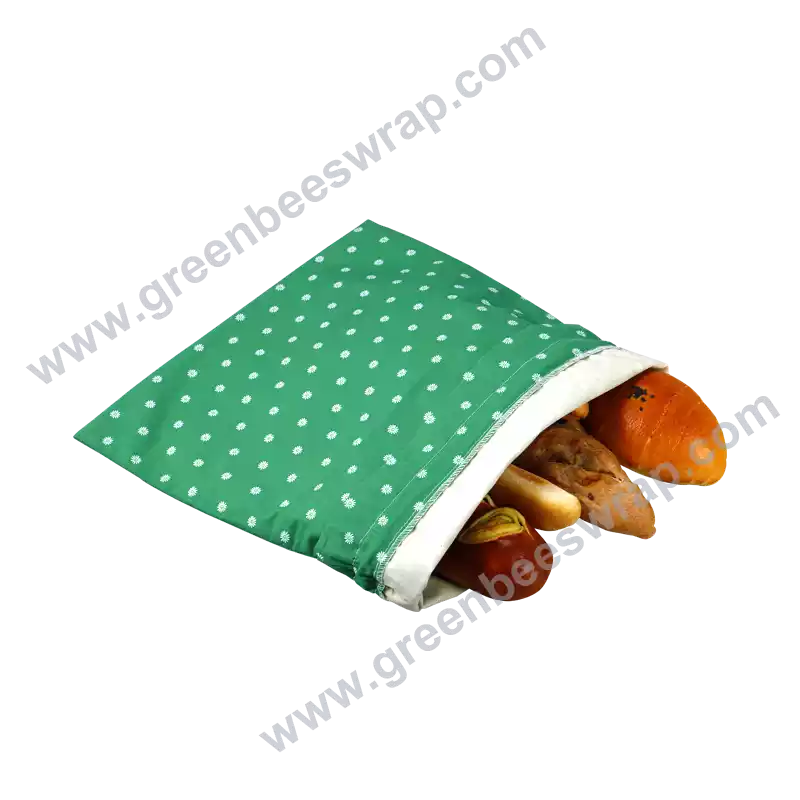
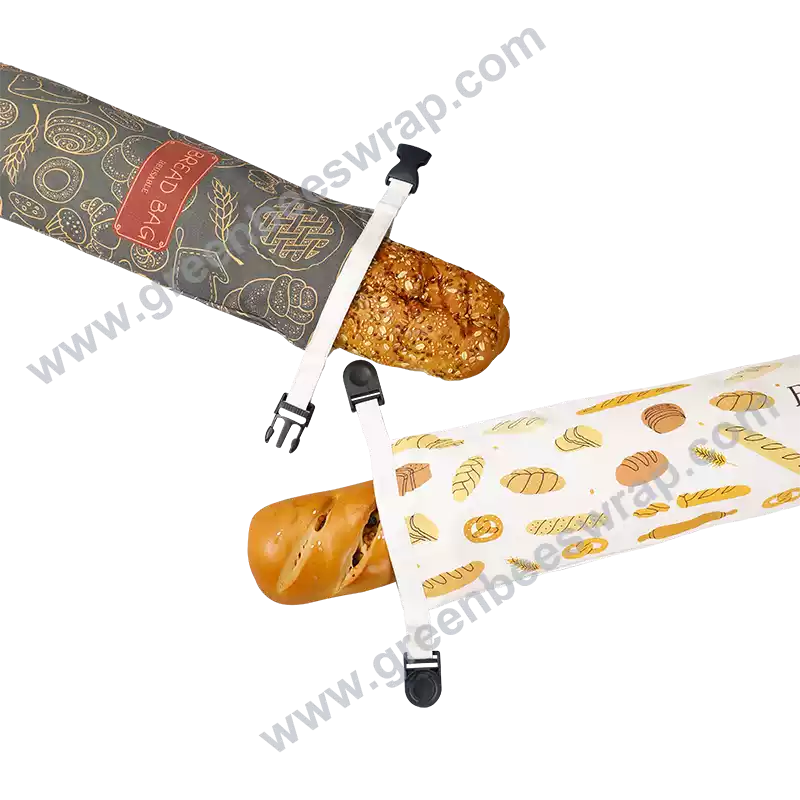
- Sac à pain en coton: Équilibre la circulation de l'air et l'humidité — 3 à 4 jours.
- Sac à pain en cire d'abeille: Crée un micro-environnement semi-respirant qui maintient un taux d'humidité idéal, limite la condensation et ralentit le séchage — 4 à 6 jours, idéal pour le pain au levain, le pain complet et les pains artisanaux.
- Boîte à pain : option classique — 4 à 5 jours.
Capacité de conservation selon le mode de stockage
| Mode de conservation | Durée de conservation |
|---|---|
| Rangement à vue | 1 à 2 jours |
| Sac en papier | 2 à 3 jours |
| Sac en coton | 3 à 4 jours |
| Boîte à pain | 4 à 5 jours |
| Sachet en cire d'abeille | 4 à 6 jours |
| Congélation | 1 à 3 mois |
Est-ce que le réfrigérateur permet vraiment de conserver le pain plus longtemps ?
Beaucoup se précipitent vers le frigo. Ce n'est généralement pas la meilleure idée.
Pourquoi la réfrigération fait-elle durcir le pain plus vite ?
Les températures du réfrigérateur (aux alentours de 4 °C) se situent dans la plage idéale pour une rétrogradation rapide de l'amidon (0 °C à 10 °C). Le pain rassit plus vite, perd de sa saveur et se dessèche.
Les boulangers professionnels s'accordent généralement à dire qu'il vaut mieux éviter le réfrigérateur pour une conservation à court terme.
Quelle est la meilleure méthode pour un stockage à long terme ?
Congélation. À -18 °C ou moins, l'activité des micro-organismes s'arrête pratiquement et le processus de détérioration ralentit considérablement, ce qui permet de préserver au mieux la qualité.
Combien de temps se conserve le pain surgelé ?
En règle générale :
| Type de pain | Temps de congélation |
|---|---|
| Pain blanc | 1 à 2 mois |
| Blé complet | Environ deux mois |
| Levain | 2 à 3 mois |
| Baguette | Environ un mois |
À consommer de préférence dans les 30 à 60 jours.
Comment bien congeler le pain
- Laissez refroidir complètement.
- Coupez-le à l'avance pour obtenir des portions faciles à servir.
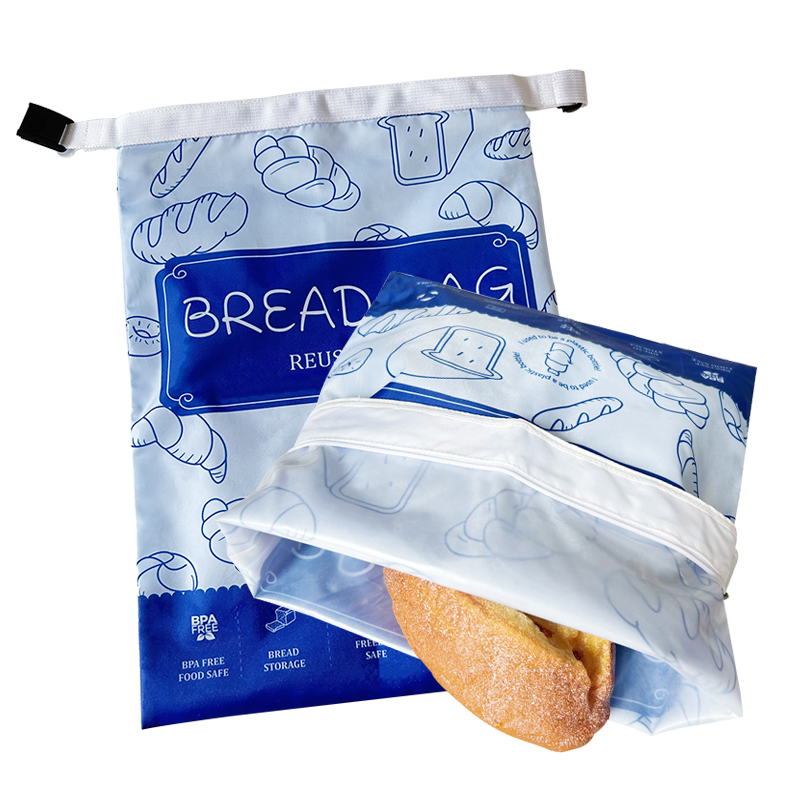
- Utilisez des sacs de congélation réutilisables pour éviter les brûlures de congélation.
- Indiquez la date sur l'étiquette et consommez d'abord les pains les plus anciens.
Comment savoir quand le pain n'est plus bon
Même bien emballé, le pain fait maison finit par se gâter. Si vous remarquez l'un de ces signes, mettez-le au compost :
- Moisissure : toute tache duveteuse blanche, verte ou noire indique que des spores se sont propagées. Ne vous contentez pas de couper la partie abîmée : le mycélium, invisible à l'œil nu, s'est répandu partout.
- Odeurs anormales : odeur aigre prononcée (au-delà de l'acidité normale du levain), odeur d'alcool ou de moisi — les bactéries ont pris le dessus.
- Dur comme de la pierre : pas de moisissure, mais dur comme de la pierre ? C'est sans danger, mais complètement rassis. Transformez-le en chapelure : c'est écologique et zéro déchet !
Comment conserver plus longtemps le pain fait maison
Suivez ces conseils :
- Laissez refroidir complètement avant de les emballer afin d'éviter la formation de condensation.
- Optez pour des matières respirantes telles que coton ou sacs à pain en cire d'abeille.
- Évitez l'exposition directe au soleil (la chaleur favorise la formation de moisissures).
- Congelez-le au bout de 5 jours, sans attendre qu’il soit durci.
Fabricant de sacs à pain personnalisés
Green Wrap est spécialisé dans les sacs à pain bio et écologiques et comprend parfaitement les besoins des boulangers amateurs :
- Vente au détail : stock disponible de produits bio sacs en coton à cordon, sacs en cire d'abeille, TPU imperméable différents styles, et bien plus encore : les achats à l'unité vous permettent de prolonger immédiatement la fraîcheur de vos produits.
- Personnalisation OEM : adaptez les dimensions, les couleurs, les logos et les messages chaleureux. Les ateliers d'artisans et les petites marques bénéficient ainsi d'emballages écologiques uniques qui ravissent leurs clients.
- Vente en gros : tarifs dégressifs, approvisionnement fiable et offres de “ reprise d'anciens sacs ” pour promouvoir un mode de vie écologique.
Nous utilisons du coton biologique de qualité alimentaire et effectuons des tests de sécurité. Nous vous recommanderons la solution la mieux adaptée à vos types de pain (moelleux ou croustillant) et à vos volumes de production.
Conclusion
Il n'y a pas de réponse universelle concernant la durée de conservation du pain fait maison : cela dépend de la recette, de l'environnement et des conditions de conservation. La plupart des pains faits maison conservent leur texture optimale pendant seulement 1 à 4 jours à température ambiante, tandis que le pain au levain et le pain de seigle se conservent souvent entre 5 et 10 jours grâce aux acides naturels issus de la fermentation.
Répartition de l'efficacité du stockage :
- À l'air libre : 1 à 2 jours
- Sac en papier : 2 à 3 jours
- Sac à pain en coton : 3 à 4 jours
- Boîte à pain : 4 à 5 jours
- Sac à pain en cire d'abeille : 4 à 6 jours
- Conservation au congélateur : 1 à 3 mois
Pour ceux qui font souvent du pain, l'utilisation quotidienne de sachets à pain en cire d'abeille, associée à la congélation pour une conservation plus longue, est la solution idéale : une fraîcheur optimale, un choix écologique et pratique.
 English
  German
  French
  Spanish
  Italian
  Dutch
Dutch